From the Nordic Blockchain Association Conference: Jennifer Shaughnessy Discusses the Future of Institutional Digital Assets
Jennifer Shaughnessy
Chief Revenue Officer
Nordic Blockchain Conference, June 2026
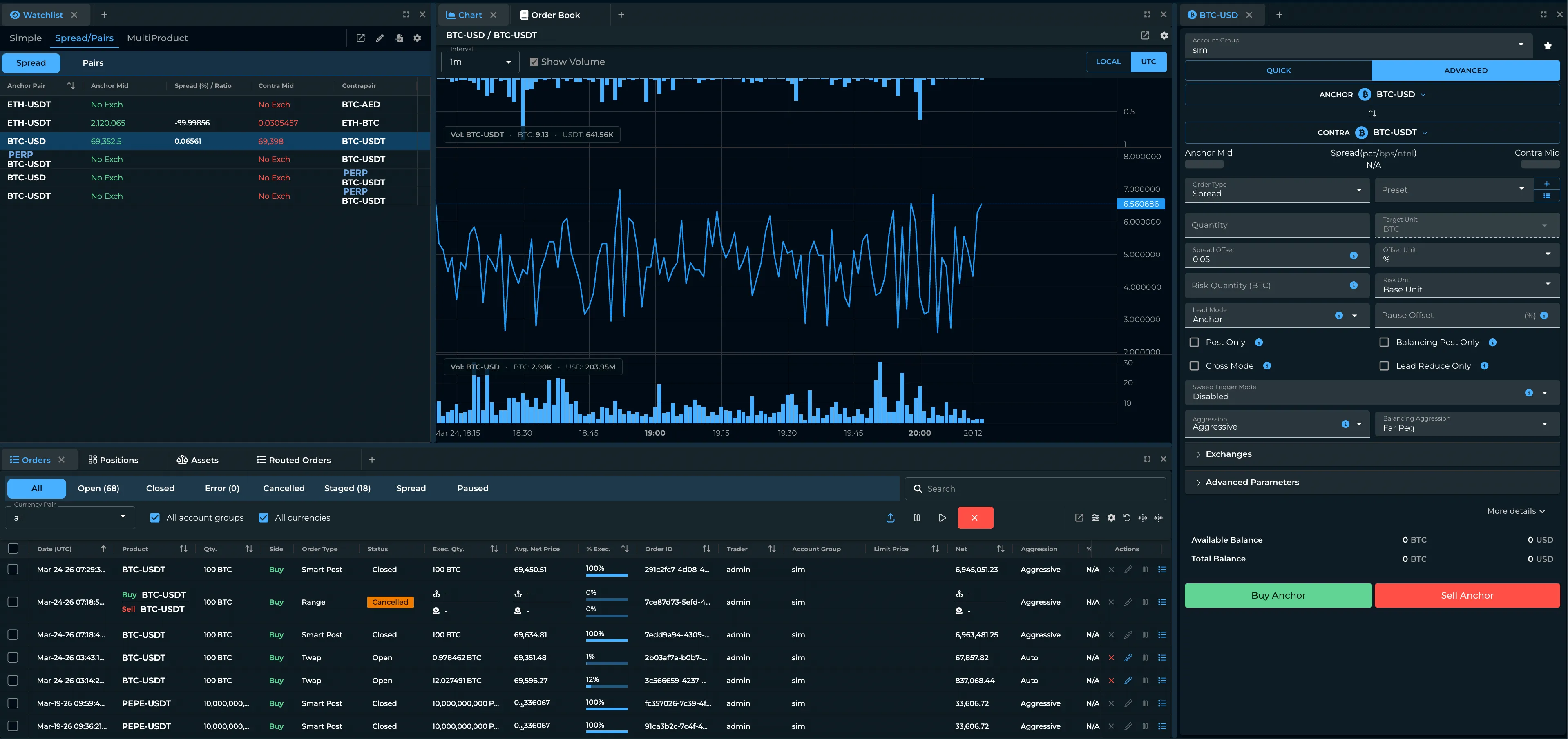
Jennifer Shaughnessy, CRO of CoinRoutes, joined a panel at the Nordic Blockchain Conference in June 2026 to discuss institutional adoption of cryptocurrency. CoinRoutes is an execution and portfolio management platform that connects to 60 trading venues and specializes in best-execution, risk controls, and liquidity aggregation for institutional clients. In this segment, Jennifer addresses what traditional finance firms demand before trading crypto, how MiCA regulation is fragmenting European liquidity, the rapid growth of tokenized real-world assets on centralized exchanges, diverging US and EU regulatory regimes, and what infrastructure gaps remain before institutional crypto trading reaches its full potential.
Speaker: Jennifer Shaunasi, CRO, CoinRoutes
Moderator: Jennifer from CoinRoutes.
Jennifer: Hey everyone. I'm Jennifer Shaunasi and I'm the CEO of CoinRoutes. We specialize in execution, portfolio management, and risk controls, and connect to 60 different venues.
Moderator: Jennifer, from your perspective when you talk to institutional clients, what are they asking for that the market hasn't yet delivered?
Jennifer: What I see when a traditional finance firm looks at us for execution is a lot more on the due diligence side, and a lot more time around that. And as was mentioned, counterparty risk — who we are as a venue — is very important. They really thoroughly check out CoinRoutes. Execution has to be very provable. These types of firms don't accept "trust me, bro." They want you to measure everything — TCA — and on the reporting side, very thorough reporting.
Moderator: What does European cryptocurrency look like at the institutional level? Is it sufficient? Is it fragmented?
Jennifer: That's a very good question. The way that we see European liquidity — it has to be pooled according to MiCA regulations, which does cause fragmentation, and it causes a lot of this liquidity to be a bit patchy. So it requires aggregation. Also, when you're trying to move serious size and you've got these pooled-off liquidity pools, you can end up really moving the market on these undenominated pairs, especially if they're illiquid. So you need a system like ours for this type of liquidity.
As far as strides in regulation around tokenized real-world assets — we're seeing real-world assets on our platform in their early days. We operate them on Kraken, and we see that you guys have put a lot of volume through it.
Moderator: And across $25 billion.
Jennifer: $25 billion? Yeah, and I think in about nine months it went from two to 25. So you're seeing extreme demand. We still anticipate some fragmentation, so we are offering multiple exchanges and do recommend Kraken for this. I think that's the take I can offer, because I'm seeing it more from how traders are using it operationally.
Moderator: How do you see the divergence in regulatory regimes, and how does it affect how you develop the product?
Jennifer: That's a great question. With CLARITY passing Senate Banking a couple of weeks ago, I personally think we're going to see them run in parallel until there's some sort of convergence, but I think that will come in the future. Right now the US is going to continue to stay in the lead around derivatives. I believe MiCA still has some challenges and friction around that, though Kraken may have solved derivatives — I think you're offering derivatives for European clients right now? So there are some workarounds. But basically the way we're going to focus is by offering all of the centralized exchanges in one place — Hyperliquid, dYdX, Aster — all of the plumbing that works within different jurisdictions until then.
Moderator: If you could change one thing to accelerate institutional adoption, what would it be? Jennifer, since you've got the mic.
Jennifer: Good question. I think the execution piece is solved, and portfolio management and risk controls have become a lot more robust in the last year or so. Where I think the new frontiers are is cross-exchange settlement, cross-exchange margin, and frictionless lending. That's the new frontier to focus on for institutions that want to trade crypto. Infrastructure is ensuring there's still a lot of work to do.

Request a demo
Find out how CoinRoutes can simplify the way you interact with digital asset markets.