What Are Tokenized Stocks? How They Work & Key Risks
CoinRoutes Research Team
Company
What Are Tokenized Stocks? How They Work, Benefits and Risks
CoinRoutes Research Team | November 20, 2026 | 7 min read
This guide explains tokenized stocks in simple terms: how they work, the main types, what they offer, the risks to watch, and how institutions trade them alongside crypto and traditional markets
DEFINITION: Tokenized stocks are blockchain tokens that track the price of real company shares or ETFs, and can be traded on crypto venues around the clock.
Tokenized stocks are digital tokens on a blockchain that track the price of a real company share, such as Apple or Nvidia, or an ETF. They let people get exposure to stocks using crypto infrastructure: they can be held in a digital wallet, traded on crypto exchanges, and moved around the clock, including on weekends.
Tokenized stocks are one of the fastest-growing parts of the market where traditional finance meets digital assets. This guide explains how they work, the main types, their benefits and risks, and how institutions trade them.
How tokenized stocks work
01 - Rule of thumb: the token is a wrapper. Its value depends on what sits behind it and who holds it.
In the most common model, a regulated issuer buys real shares and holds them with a custodian. It then issues tokens on a blockchain, usually one token for each share or a fixed fraction of one. When someone buys a token, the issuer may buy more shares; when tokens are redeemed, it can sell shares. This keeps the token price close to the price of the real stock.
Because the token lives on a blockchain, it can be sent between wallets, used in DeFi applications and traded on crypto venues at any hour. Well-known examples include the xStocks family of tokens, such as AAPLx and NVDAx, which are available on several blockchains and exchanges. By spring 2026, xStocks reported more than $28 billion in transaction volume and over 100,000 unique holders.
The main types of tokenized stocks
02 - Framework: backed, synthetic or native. Always check which one you are buying.
Type | How it works | Main thing to check |
|---|---|---|
Backed (custody-based) | An issuer holds real shares with a custodian and issues tokens against them | The issuer, the custodian and how often holdings are verified |
Synthetic | The token tracks a share price through derivatives or collateral, with no real share held | Collateral quality and how price tracking is maintained |
Natively issued | The company issues its actual shares directly on a blockchain | Legal rights attached and where the shares can trade |
Most tokenized stocks traded today are the backed type. In most cases, token holders get price exposure but not the full rights of a shareholder, such as voting. Dividends may be passed on to holders, often as an adjustment to the token balance, depending on the issuer.
Benefits of tokenized stocks
03 - In practice: the main gains are access, timing and flexibility.
Trading around the clock
Stock exchanges have fixed hours. Tokenized stocks can trade 24/7 on crypto venues, so investors can react to news on evenings and weekends.
Wider access
Investors in many countries can get exposure to large US companies through a crypto account, often in small fractions.
Faster settlement
Transfers settle on the blockchain, often within minutes, instead of the standard settlement cycle of traditional markets.
Use across crypto markets
Tokens can be used as collateral, moved between venues and combined with crypto trading strategies in one portfolio.
Risks of tokenized stocks
04 - Checklist: five risks to understand before trading.
Issuer and custody risk: the token is only as strong as the issuer and custodian holding the real shares.
Price gaps: when stock markets are closed, the token can move away from the last stock price, and gaps can appear when markets reopen.
Liquidity: trading on some venues is still thin, so large orders can move the price.
Limited rights: holders usually do not have voting rights or a direct claim like a shareholder.
Regulation: availability depends on the issuer and the investor's country, and many products are not offered to US persons.
How institutions trade tokenized stocks
For institutions, tokenized stocks are not only a way to buy exposure. They also create new trading opportunities. The same company can now trade as a token on crypto venues, as a share on a stock exchange, and as an equity perpetual future or traditional future. Prices across these markets do not always move together, especially when stock exchanges are closed. Desks with the right tools can trade the spread between them. Read more in How Institutions Access Tokenized Stocks (xStocks).
How CoinRoutes fits
IN PRACTICE - CoinRoutes: tokenized equities, crypto and traditional markets in one execution platform.
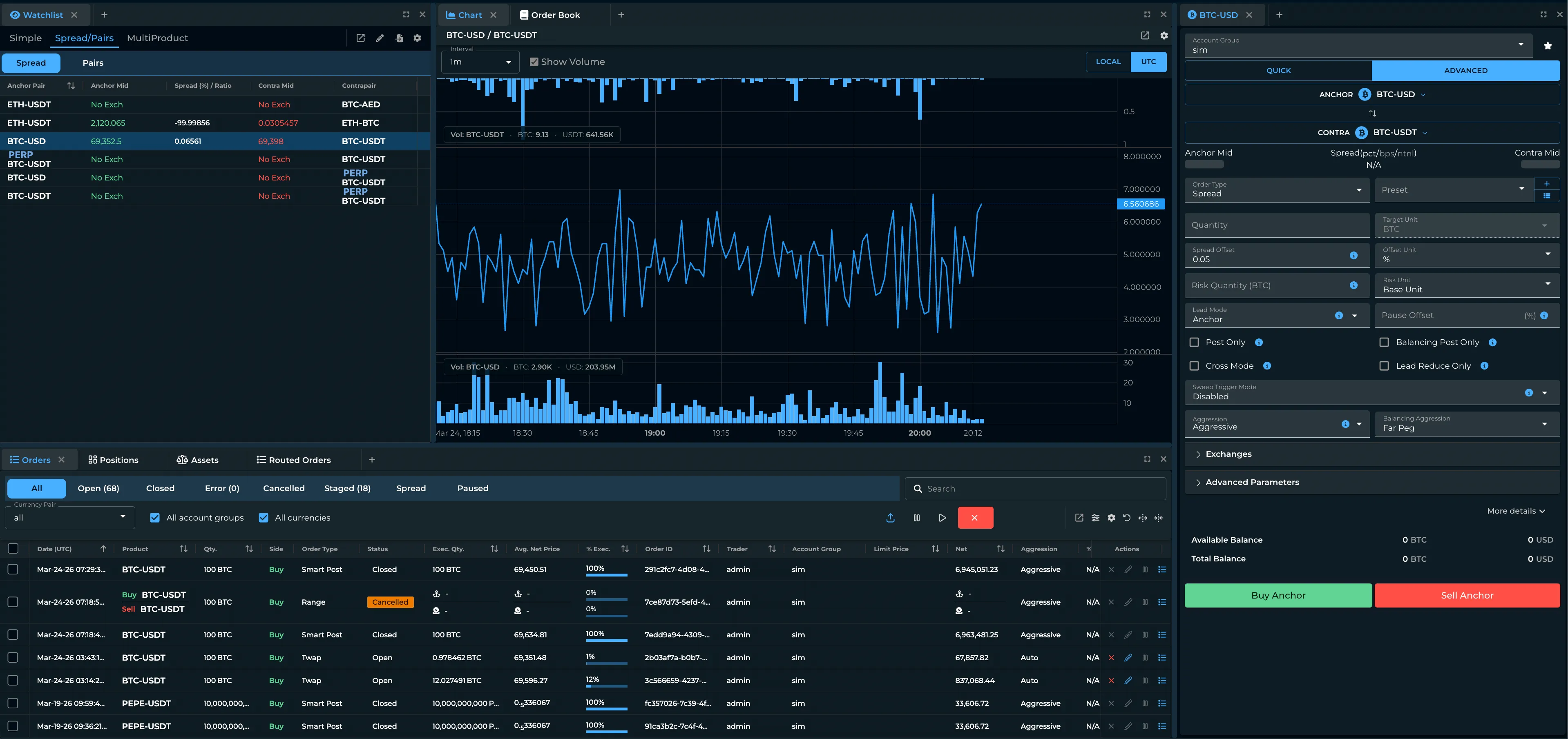
Since April 2026, CoinRoutes has been integrated with xStocks, giving institutional clients access to tokenized stocks and ETFs in the same platform they use for crypto spot, perpetual futures and traditional markets. CoinRoutes' Spread algorithms can trade across tokenized equities, traditional equities, equity perpetual futures and traditional futures, so desks can capture price differences between them in a single order.
Smart order routing finds the best price for each token across connected venues, and CoinRoutes Clarity brings tokenized securities, digital assets, equities and futures together in one portfolio view.
Frequently asked questions
What are tokenized stocks?
Tokenized stocks are blockchain tokens that track the price of real company shares or ETFs. They can be held in a digital wallet and traded on crypto venues at any time.
Are tokenized stocks the same as real stocks?
Not exactly. Most give price exposure to a real share held by an issuer, but holders usually do not get full shareholder rights such as voting.
Can you trade tokenized stocks 24/7?
Yes, on crypto venues that list them. Prices can move away from the last stock price when traditional markets are closed.
Are tokenized stocks safe?
They carry risks, including issuer and custody risk, liquidity risk and regulatory risk. Check who issues the token, who holds the underlying shares and how holdings are verified.
Can US investors buy tokenized stocks?
Many tokenized stock products are not available to US persons. Availability depends on the issuer and the investor's country.
Exhibits and examples are illustrative and do not quote market data. Product features described are as of the publication date. This note is for informational purposes only and is not investment advice.
Request a demo
Find out how CoinRoutes can simplify the way you interact with digital asset markets.